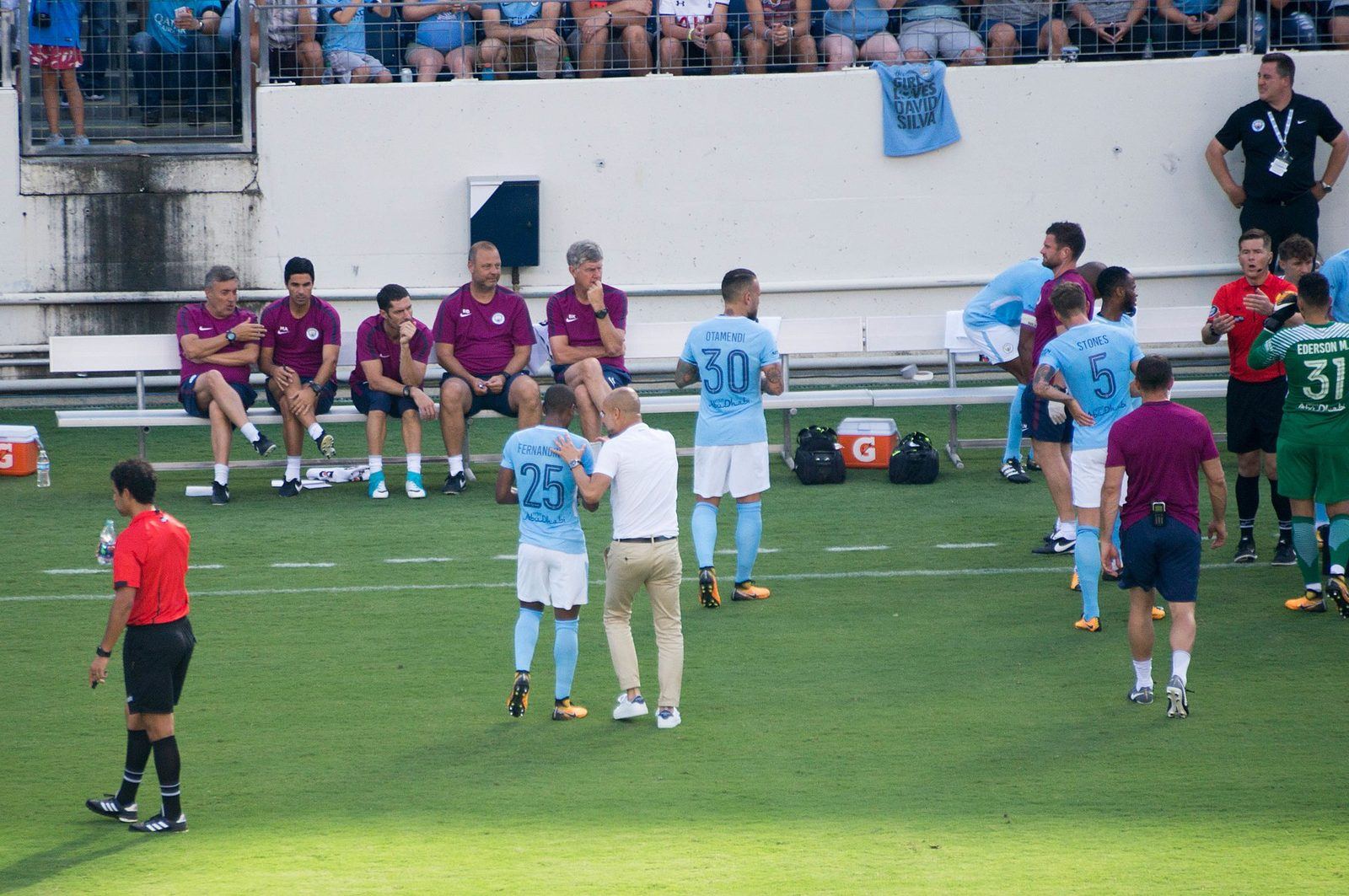
Manchester City became the second English club, after Manchester United in 1999, to win the league, the FA Cup and the European Cup in one season. The final was settled by a Rodri goal against Internazionale, and it was not a comfortable night.
The change that made the difference
Midway through the season Pep Guardiola began inverting John Stones — a centre back stepping into midfield when City had the ball, giving them a numerical advantage in the middle third without committing another attacker.
The effect was defensive as much as creative. City’s problem in previous European campaigns had been the transition after losing the ball high up the pitch. An extra body in central midfield shortened the distance the first defender had to cover, and the counter-attacks that had knocked them out in previous years stopped arriving.
What it cost
A more controlled side scored slightly less freely and won more matches by one goal. Erling Haaland’s 36 league goals get the headline, but City’s actual improvement that season was at the other end.
The idea has since spread far beyond Manchester, which is the usual fate of a Guardiola solution: it wins something, and then it becomes a coaching-badge module.